How Horoskope AI works
Your chart is calculated first, and interpreted second
Horoskope AI casts your birth chart from an astronomical ephemeris, then reads it in Vedic and Western astrology. This page is the whole story: the engine, the two traditions, the four horizons, the guru, your family, and what happens to your data.
The short answer
What is Horoskope AI?
Horoskope AI is a personal astrology guru: an AI astrologer that computes your birth chart from your exact birth date, time and place and reads it in both Vedic astrology (Jyotish, the sidereal zodiac used in India) and Western astrology (the tropical zodiac), together, from one chart. Where a horoscope column gives one sun sign a paragraph, Horoskope knows your Sun sign, Moon sign, Vedic Rashi and rising sign, the planetary period you are living through, and today's sky against all of it. It answers the questions you bring (Pro), in plain words or the classical vocabulary, and it looks out for you daily.
Horoskope AI computes your birth chart from your exact birth minute, reads it in Vedic and Western astrology at once, and looks out for you every day: what today favours, when to move, when to wait, and honest answers to the questions you actually have. The reading is free. The guru, who answers your own questions, is Pro.
What comes free, and what Pro adds
With no account you get your four signs, today's reading in full in both voices, and the morning email once your birth details are in. A free account adds your full chart drawn both ways and your life chapters. Pro is the guru itself: questions answered from your chart, this week, this month and your year, every day dated and timed, and read-aloud in eight languages. Try Pro free whenever you are ready: 7 days, no card, and nothing is charged. Afterwards your account continues on Free.
- Enter your birth detailsDate, time and city. Time optional; it gives the rising sign.
- Read it two ways, freeYour four signs, then today in full, in the Vedic and the Western voice. The week, the month and your year, which runs from your birthday rather than from January, come with Pro.
- Keep it, or go deeperKeep the page, or add your email at the end of the reading and each morning brings a first look at the day, one tap from the full reading. An account adds the full chart. Try Pro free when you choose: 7 days with the guru, no card, and nothing charged.
Where to start
Five doors, so the first click matches why you came.
Why did you come?
What can Horoskope read for you? Pick the door that fits.
Your day, your questions, your child's year, a marriage match and the basics of astrology, each read from a calculated birth chart.
Every door starts from a calculated chart. Start free; the doors marked Pro open with the guru.
Today, read from your chart
Not a column for your sign: what this day tends to favour for you, in the Vedic and the Western voice, with a first look by email every morning if you like.
Ask your guru anything
Work, money, the person on your mind, the move you are weighing. Honest answers, instructed to cite your own placements, 2am included.
Your child's chart, read with care
Temperament, what settles them, the shape of their year. Tendencies and timing only, never fear, for your son or daughter.
Matching for marriage
The 36-guna score, then what a score cannot see: the seventh houses, Mangal compared, the periods running for both. A report the families can share.
Learn astrology, with your chart as the example
From your sign to your dasha, in plain words. Every lesson ends with how to find it in your own chart.
Why it is different
A birthday against a birth chart, the horoscope a feed would print today against one computed reading, then the same sky in both traditions.
A horoscope, or your birth chart
Your birth chart has more to say than your Sun sign
A sun-sign horoscope starts from one fact, your birthday, and writes one paragraph for a twelfth of the world. Horoskope starts from your birth date, time and place, calculates the whole chart, and reads it in two traditions.
A sun-sign column
One sign, one paragraph
- Your birthday
- One of 12 Sun signs
- The paragraph everyone in your sign reads
Horoskope AI
Your chart, calculated, then read
- Birth date, exact time and place
- Your full birth chart, calculated
- Read in both voices
- Your personal interpretation
- See why
What a birthday cannot tell you: your Moon sign, your rising sign, your houses, your nakshatra and the planetary period you are living through. Every one of them is in your birth chart, and none of them is in a Sun-sign column.
The difference, in one screen
Your sun sign is one twelfth of the internet.
Your chart is just you.
A horoscope starts and stops at your sign. A brief starts at your birth date, your place and, when you have it, your birth time, and it can show you the placements it was read from.
Same day, same sky. A sun-sign column is written for one person in twelve: about 680 million people per sign (a world of about 8.2 billion, divided by 12). Beside it is what one chart's brief says to one of them.
Taurus
Everyone born Apr 20 to May 20
Today is a good day to focus on yourself, Taurus. Your confidence is high and others notice. Be open to new opportunities.
Lucky number: 7 · Lucky colour: gold · Mood: optimistic
Sent to everyone born in the same thirty-odd days. Nothing in it was computed from you.
An illustration of the format. It reads the Sun's sign and nothing else from a birth.
Example · Sunday, October 18
A day you should use. Put the effort into the timing of things while it is easy.
for the example birth (14 May 1990, Chennai) · Cancer rising, Moon in Capricorn. The lines below count signs and houses in the sidereal zodiac, from the Moon in Sagittarius.
Health and energy
Take the workout you have been skipping, and take it properly.
Why: The Moon 1st from yours today.
You let warmth show straight away. That openness gets met rather than absorbed in a stretch like this.
The Moon moves on into Capricorn, your 2nd from the Moon, before the day is out.
Timing
Today's star count favours signing or booking a date.
Why: The Moon 1st from yours today.
You spend effort selectively rather than evenly. This is worth counting as one that matters.
Tomorrow counts as a supportive day from your birth star, a better morning for the ask.
Best window: 04:23 to 05:11, the pre-dawn quiet window, at the birth place.
Money, relationships: quiet today, and it says so instead of inventing news.
Get mine · free, no cardComputed this hour by the same engine as your free brief, from one birth date, time and place and where today's Moon falls in that chart.
Western astrology + Vedic astrology
Two traditions. One birth chart.
Western astrology and Vedic astrology measure the same sky from different starting points. Horoskope calculates your chart in both zodiacs from your one birth moment and reads it in two voices: the Vedic voice in Jyotish's own terms, the Western voice in plain English with the tropical signs and transits a Western reader checks against. Switch between them on the same chart.
Western astrology counts the zodiac from the spring equinox, the tropical zodiac. Vedic astrology, Jyotish, counts it from the fixed stars, the sidereal zodiac. The two have drifted apart by the ayanamsa, which the wheel below draws at today's value.
The sky right now, in both zodiacs
18 Oct, 03:20 UTC
| Planet | Western | Vedic |
|---|---|---|
| Sun | 24.8° Libra | 0.5° Tula |
| Moon | 18.9° Capricorn | 24.7° Dhanu |
| Mars | 11.4° Leo | 17.1° Karka |
| Mercury | 18.8° Scorpio | 24.6° Tula |
| Jupiter | 22.4° Leo | 28.2° Karka |
| Venus ℞ | 4.3° Scorpio | 10.0° Tula |
| Saturn ℞ | 10.2° Aries | 16.0° Meena |
| Rahu (North Node) | 26.8° Aquarius | 2.6° Kumbha |
| Ketu (South Node) | 26.8° Leo | 2.6° Simha |
Recomputed every hour by the same engine that casts your chart. The planets are in the same place in both columns; only the zodiac they are measured against differs, by 24.23°.
Western astrology
The tropical zodiac, counted from the spring equinox
- Your tropical Sun, Moon and rising signs, beside your Vedic ones on the free reading
- Twelve houses, counted in whole signs from your tropical rising sign
- Transits of the Sun, Moon and five visible planets through your houses, retrogrades included
- Your day's timing counted the Vedic way, from the sidereal Moon, and told in plain English
- The Moon's phase and the planet that rules the day
- Read for psychology: how the moment feels and what it asks of you
Vedic astrology · Jyotish
The sidereal zodiac, counted from the fixed stars
- The Lahiri ayanamsa, 24.23° today, the standard used in India
- Your Rashi (Moon sign), Lagna and nakshatra with its pada
- 16 divisional charts, the vargas, and the 150 slivers of the nadiamsa
- Vimshottari dashas: the planetary period you are in, and when it turns
- Read for timing: when to move, and when to wait
One birth, two readings
Example · born 14 May 1990, 10:30, Chennai
| Placement | Western, tropical | Vedic, sidereal |
|---|---|---|
| Sun | Taurus | Mesha (Aries) 29°26′ |
| Moon | Capricorn | Dhanu 17°39′, Purva Ashadha pada 2 |
| Rising sign | Cancer | Karka (Cancer) 5°58′ |
| Timing | Today's transits through the houses | Mangala (Mars) mahadasha, Chandra (Moon) antardasha |
Same planets, different frame
Nothing moves between the two charts except the zodiac. That is why one birthday can be a Taurus Sun in the West and Mesha in Jyotish, and both are correctly calculated.
Different questions, both useful
Western astrology is strongest on the psychology of the moment. Vedic astrology is strongest on timing, through the dashas. Read together, they give you the what and the when.
Ask where they differ (Pro)
Ask why your Vedic Moon sign is not your Western one, or what your current dasha means, and the answer is read from your own chart.
Beginner or expert
New to astrology, or already know your chart?
The same calculated chart, two ways in. Start in plain English, or go straight to the classical depth.
I'm new to astrology
We'll explain your chart in plain English
- Readings in everyday language, with no jargon unless you ask for it
- What your Sun, Moon, Rashi and rising sign each mean
- Sanskrit terms on your chart, your life chapters and Today explain themselves when you hover or tap them
- Questions in your own words, answered from your chart (Pro)
I know my chart
Go straight to the depth
- Positions to the degree and minute, the way a family patrika prints them
- Your nakshatra and pada, Rashi and Lagna, beside your tropical signs on the free reading
- Your Vimshottari life chapters, mapped to age 100
- The D1 and D9 charts drawn, all 16 divisional charts behind Ask (Pro)
- Transits by house, North Indian and South Indian charts, the nadiamsa
Things a horoscope cannot say
Stop reading the caption. Read the chart.
Mercury retrograde is true of everybody at once. Whether it touches your work, your money or nothing at all is decided by where it falls in your chart.
The feed writes one line for a twelfth of the world. A guru writes one for you, with the planet, the house and the date, so you can check it.
Mercury retrograde
Scorpio season
Love this month
Money luck
Example: every guru line is computed this hour for the example birth (14 May 1990, 10:30, Chennai). Houses are whole signs in the sidereal (Vedic) zodiac, counted from its rising sign, Cancer, unless a line says from the Moon. Dates are at the birth place. Lines like these come from the week, month and year readings and from Ask, which are Pro. These are tendencies, never certainties.
Proof, in figures
The numbers behind a reading
Every figure here is computed by the engine or pinned by a test, not typed by hand.
What each of these numbers means
- 24.2° how far the two zodiacs have drifted apart
- The tropical zodiac and the sidereal one parted company centuries ago. This is the gap today, and the reason your sign may move by one when you read it here.
- 16 charts computed, not just the one
- Marriage, work, children and money each have a chart of their own, the vargas. All of them are computed for you, and Ask (Pro) reads each question in the one it belongs to rather than guessing from the first.
- 150 named slivers each sign is read in
- Every sign is cut into 12 arc-minute slivers, the nadiamsa. The rising sign crosses one in about a minute, which is why the birth minute is asked for.
- 100 yrs of your life chapters, mapped
- The Vimshottari cycle runs 120 years; Horoskope maps yours from birth to age 100, so the chapter you are living through and the one after it are both dated rather than described in the abstract.
- 1,800+ a knowledge base of over 1,800 passages behind Ask (Pro)
- Ask reads the tradition before it answers, and is instructed to name the chart factors it read from, so an answer can be checked rather than believed.
How it works
Calculated first and interpreted second, four horizons from one chart, a date you can check in your own future, and the layer underneath a sign.
The Horoskope engine
Calculated first, interpreted second: how Horoskope reads your birth chart
Your chart is calculated before any AI is involved. The AI interprets the positions it is given and is never asked to invent one.
Your sign is the doorway. Your chart is the room.
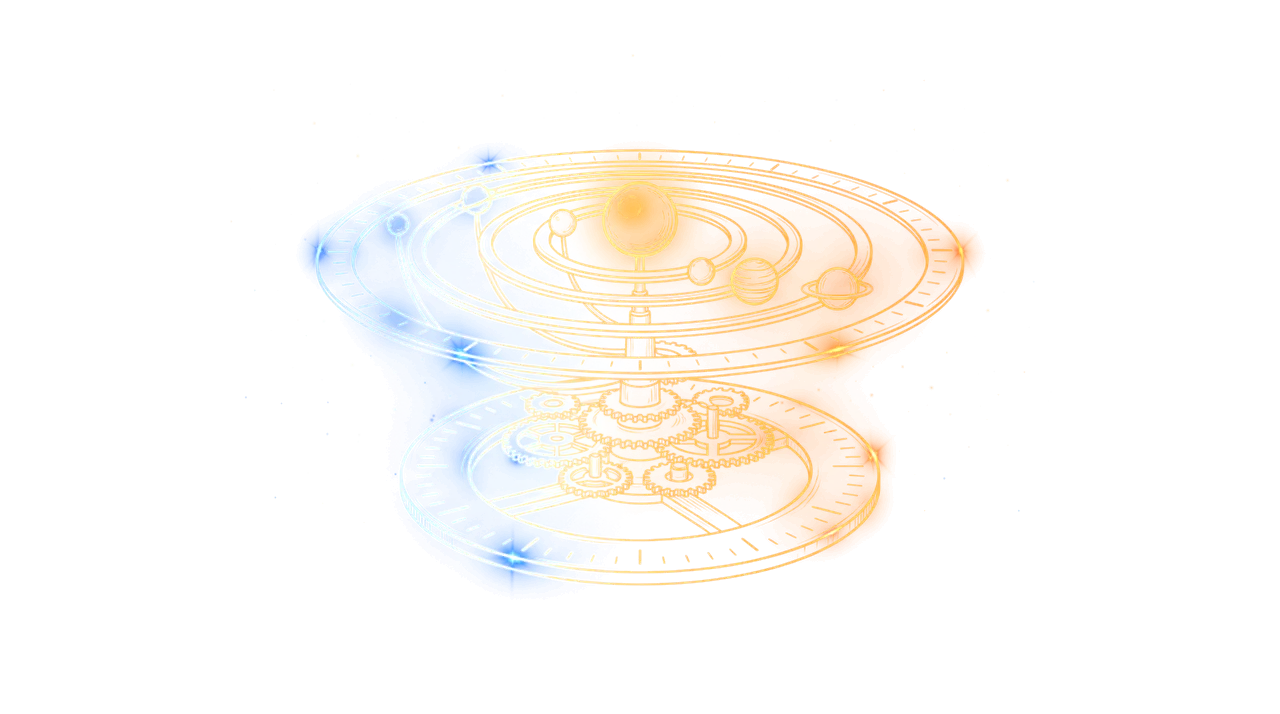
1 · Calculation
Your birth moment
Date, exact time and city. There is an honest path if your birth time is unknown: the free reading leaves the rising sign out rather than guessing it, and the app casts for noon and marks the rising sign and houses approximate.
Free birth chart calculator2 · Calculation
Positions calculated
A live astronomical ephemeris places the Sun, the Moon, the five visible planets from Mercury to Saturn, and the Moon's nodes for your exact minute and place. This is arithmetic, not language.
How the chart is computed3 · Calculation
Both zodiacs computed
Western: tropical signs, whole sign houses and transits. Vedic: sidereal at Lahiri 24.23°, your nakshatra, 16 divisional charts, the nadiamsa and your Vimshottari dashas.
How to read a birth chart4 · Interpretation
AI interprets
Only now does AI write: your day, week, month and year in the Western and the Vedic voice, from your calculated positions and a knowledge base of over 1,800 passages. It is never asked to compute a position, a date or a window.
What the AI does and does not do5 · Interpretation
You ask why
Open Why? to see the planet, the house and the star a reading came from, or ask your AI astrologer a follow-up about your own chart (Pro).
What you can ask
Daily, weekly, monthly and yearly horoscope
One chart. Four chapters.
Your chart is fixed at birth. The sky is not. Horoskope reads your day, week, month and year with four techniques at four speeds: the Moon today, the Moon across seven days, the Sun for the month and the slow planets for the year, so the four readings cannot be one paragraph at four lengths.
Today
The Moon against your birth star
The Moon changes sign about every two and a quarter days. Today's reading counts from your birth star to the Moon's, checks the Moon against your own Moon sign, and names today's best hours and the ones to keep small.
This week
A seven-day census of the sky
Every day of this week, Monday to Sunday, is weighed against your chart, so the week names which days are yours and which to keep small.
This month
The Sun's month
The Sun's passage through one sign of your chart sets the month's theme: the part of life it lights, and what that asks of you.
This year
Jupiter, Saturn and the nodes
The slow planets changing sign set the year, counted from your birthday rather than from January, which is the classical annual unit.
Today is free with no account, in the Western and the Vedic voice. The week, the month and the year come with Pro, which puts dates on all four: today hour by hour, every day of the week and the month, and the dates that turn your year. You can try Pro free.
Try it on yourself
When is my Saturn return?
Your Saturn return is the season when Saturn comes back to the sign it held on the day you were born. Saturn takes about 29 and a half years to circle the zodiac. So it comes around near 29, again near 59, and near 88.
Saturn moves slowly, so a birth date settles its sign with no birth time needed, except within a day of Saturn changing sign, which the calculator flags. Jyotish reads the return by sign, as a season of two and a half to three years. Right now Saturn stands at 16.0° Pisces in the sidereal zodiac.
Saturn takes about twenty-nine and a half years to come back. Find out when yours lands.
Once every twenty-nine and a half years, Saturn returns to the sign it stood in on the day you were born. Astrologers read that season as a hinge in a life. Pick your birthday: Saturn moves so slowly that the date settles it (the calculator flags the rare birthday within a day of a sign change), so no birth time, no account, no email.
The tradition this runs on reads a transit by sign rather than by degree, which is why a return is a season of two and a half to three years rather than a single day. What Saturn does with those years is read from where it sits in your chart, and its long pass over your Moon (Sade Sati) needs your birth time.
Everyone gets one somewhere around 29, and a second around 59. Pick your birthday and see where yours falls.
What it tends to mean
The tradition reads it as a season of taking stock. Commitments tend to be tested, and what is built then tends to be built to last. It describes a tendency, never a verdict.
What a birthday cannot tell you
What Saturn does with those years is read from where it sits in your chart, not from the sign alone. And Saturn's long pass over your Moon, the seven and a half year stretch the tradition watches most closely (Sade Sati), is measured from your Moon rather than from your Saturn. Both need your birth time.
Where East meets West, in your stars
What is Nadi astrology, and why does the birth minute matter?
Nadi astrology reads each planet inside its sign, not just the sign. Every sign is cut into 150 slivers, the nadiamsa. The rising sign crosses one in about a minute, which is why the birth minute matters.
A sun sign is one twelfth of the sky. A birth chart is nine positions in it. Underneath both, the tradition this runs on reads the sliver of a degree you were actually born into, and draws the whole thing in both conventions a family will recognise. You get the precision either way; the Sanskrit is optional.
Built on Vedic astrology. Spoken plainly.
The fine grain
Read down to a fifth of a degree
A sign is 30 degrees wide. The Nadi tradition this is built on cuts each sign into 150 named slivers of 12 arc-minutes, the nadiamsa. Your free chart shows the sliver each planet was born into, and Ask and the Life Blueprint (Pro) read character from it. Your birth minute decides it, which is the point.
Why it adds up to 360°
Sixteen charts, nine planets, one life
Marriage, work and family each have a chart of their own, and the fine-grained layer runs underneath all of it. All sixteen are computed for you: the free chart draws the birth chart and the navamsa and weighs every planet across all sixteen, and Ask (Pro) reads each part of life in its own chart. With your life chapters and the daily transits, a difficulty is located rather than announced, and traced to the planet it belongs to.
That is what a 360 degree view means here: not more adjectives, but more of the chart actually consulted, and a difficulty traced back to the planet that carries it. Today ends on one free practice tied to the day's main factor, and Ask (Pro) is instructed to pair a difficulty with the free practice the tradition gives for it.
What you get
The guru, for when a reading is not enough, and what your family gets.
Pro · Ask the guru
When the brief is not enough, ask the guru
Ask your chart anything. The brief tells you how the day leans; sometimes you have one decision in mind.
Ask is part of Pro. It reads your chart and is instructed to cite the chart factors behind its answers.
Ask it anything, 2am included (Pro)
Questions you could bring
- Why has work felt unusually intense lately?
- What does my current Vedic dasha mean for me?
- Which transits matter most for me this month?
- Why is my Vedic Moon sign different from my Western one?
- What patterns show up in my relationships?
- Which days this month suit a difficult conversation?
- What does the life chapter I am in now ask of me?
- Why does this week feel slower than last week?
- What should I pay attention to this year?
What Ask includes
- Ask the guru about work, money, relationships and timing: about 500 questions a month
- Ask out loud and hear the answer spoken back
- Highlight any passage anywhere and ask about that
- Conversations are saved with your profile, so Ask can refer back to earlier questions.
It describes tendencies, never certainties, and gives no medical, legal or financial advice.
For the people you will send it to
For your family, in the way your family reads a chart
One account reads for the whole family: 2 profiles on Free, 5 on Pro.
Eight languages
Any page read aloud, in your own language. Read-aloud comes with Pro, in all eight languages.
It is the difference between sending a parent a chart and reading it to them, for a parent who does not get on with a screen, or who would rather hear it in the language they think in.
North Indian and South Indian, side by side
The same computed chart drawn both ways: the North Indian diamond with houses fixed and signs moving, and the South Indian grid with signs fixed and the rising sign marked. Read the one you grew up with, and hand your family the one they read.
Your full birth chart, drawn the North Indian and the South Indian way, in the Vedic and the Western voice.
Matching for marriage
The free kundli matching gives the Ashtakoota total out of 36 and each koota's points, with no account.
In the app, matching comes with Pro, which adds the full compatibility reading: what the score actually turns on.
Try kundli matchingA child's chart
A child's year ahead, read from their birth details in plain words, is free with no account.
Pro adds the naming page for a newborn: syllables from the birth star, a shortlist, a name-check and the ceremony dates.
Read a child's year aheadOne chart, your way
Vedic or Western, in English or, with Pro, Hindi and six more: read it the way you want
Whether this is your first chart or your fiftieth, you are looking at the same computed chart.
Two styles
Two ways to read one chart
Western speaks in plain everyday language: your signs, your houses, your life chapters. Vedic keeps the classical Sanskrit vocabulary the tradition wrote in. Switch any time; the chart never changes.
Eight languages (Pro)
Send it to your mother in her language
English, Hindi, Marathi, Punjabi, Gujarati, Telugu, Tamil, Kannada. Each account picks its own language, so on her account she reads the compatibility report in hers while you read yours in English, from the same computation. All eight come with Pro; Free reads in English.
No jargon wall
The terms explain themselves
Reading in the Vedic style? Hover or tap a Sanskrit term on your chart, your life chapters or Today and it explains itself in plain English, so the classical vocabulary stops being words you nod along to and starts being things you know.
What you can check
How the chart is computed, where a reading stops, and what happens to your data.
Method, limits and data
How it is computed, where it stops, and your data
The chart comes first and the words come after it. You can check the chart.
Method
- Your chart is computed from an astronomical ephemeris, in the sidereal zodiac at the Lahiri ayanamsa, now 24.23°.
- 16 divisional charts are computed, and each sign is split into 150 slivers of 12 arc-minutes, the nadiamsa.
- Day, week, month and year each come from a different input. The day reads today's Moon against your birth star, and the week a seven-day count. The month reads the Sun, and the year Jupiter, Saturn and the nodes changing sign.
- Every position, date and window is computed by rules, with no AI model involved. The written readings and Ask (Pro) are AI text, run on AWS Bedrock from your calculated positions and a knowledge base of over 1,800 passages. When the model does not answer in time, the reading is composed by rules from the same positions instead.
Limits
- It describes tendencies, never certainties. It does not predict events or guarantee outcomes.
- It is for reflection, cultural interest and entertainment. It is not medical, legal, financial or psychological advice.
- We will never tell you something bad is coming to make you open the app.
- No gemstones, pujas or paid remedies. What we sell is Pro and token booster packs.
Your data
- We never sell your data. Your chart never trains anyone's model. Export or delete everything, any time.
- Account data is held in a Postgres database on AWS, in private subnets, with TLS connections.
- Neither Clevera nor AWS Bedrock uses your content to train foundation models. Voice questions are transcribed, and the audio is discarded once the transcript exists.
The two-zodiac wheel on this page is recomputed every hour with the same engine that computes your chart. Not an illustration. At its last update the Moon stood at 24.7° Sagittarius, and Saturn at 16.0° Pisces, in the sidereal (Vedic) zodiac.
Why Horoskope
Not a chatbot with an astrology prompt
A blank chat starts from whatever you type into it. Horoskope starts from your calculated chart, in two traditions, on the date you are reading it.
- An astrology engine
- Your birth minute
- Western astrology
- Vedic astrology
- Today's sky
- A conversation
Western and Vedic, together
One birth moment read in both traditions: one chart, cast in the sidereal zodiac and worded the Vedic or the Western way, with the Western voice's signs and today's sky in the tropical zodiac.
Your entire birth chart
Sun, Moon, rising, houses, nakshatra, dashas and the divisional charts. Not one sign out of twelve.
Calculated before any AI
Positions come from an ephemeris. The AI interprets them and is never asked to produce one.
Personal to your timing
Today, this week, this month and your year, each read from a different part of the sky. The day is free; the other three come with Pro.
You can ask why (Pro)
Follow-up questions answered from your own chart, instructed to name the chart factors it read from.
Plain or classical
Plain English by default, the Sanskrit vocabulary one switch away, every term explained.
Your free reading
Birth date, time and city. No account, no card, and the birth time is optional.
Free · no account
Your first reading
Your Sun, Moon, Rashi and rising sign. Then today in full, in both voices, with what it means for work, money, family and health. The week, the month and your year come with Pro, which you can try free.
- Your details
- Your reading
When and where were you born?
Know your Rashi or Lagna already? They come from exactly these details, so this is the same answer. What are they?
We do not keep the birth details you type here: the written reading is kept for up to 14 days under a one-way hash of them, so the same birth is not written twice. If you ask for the morning email, we keep the birth details it needs. Your reading opens on its own page.
Get a first look every morning by email, from the reading